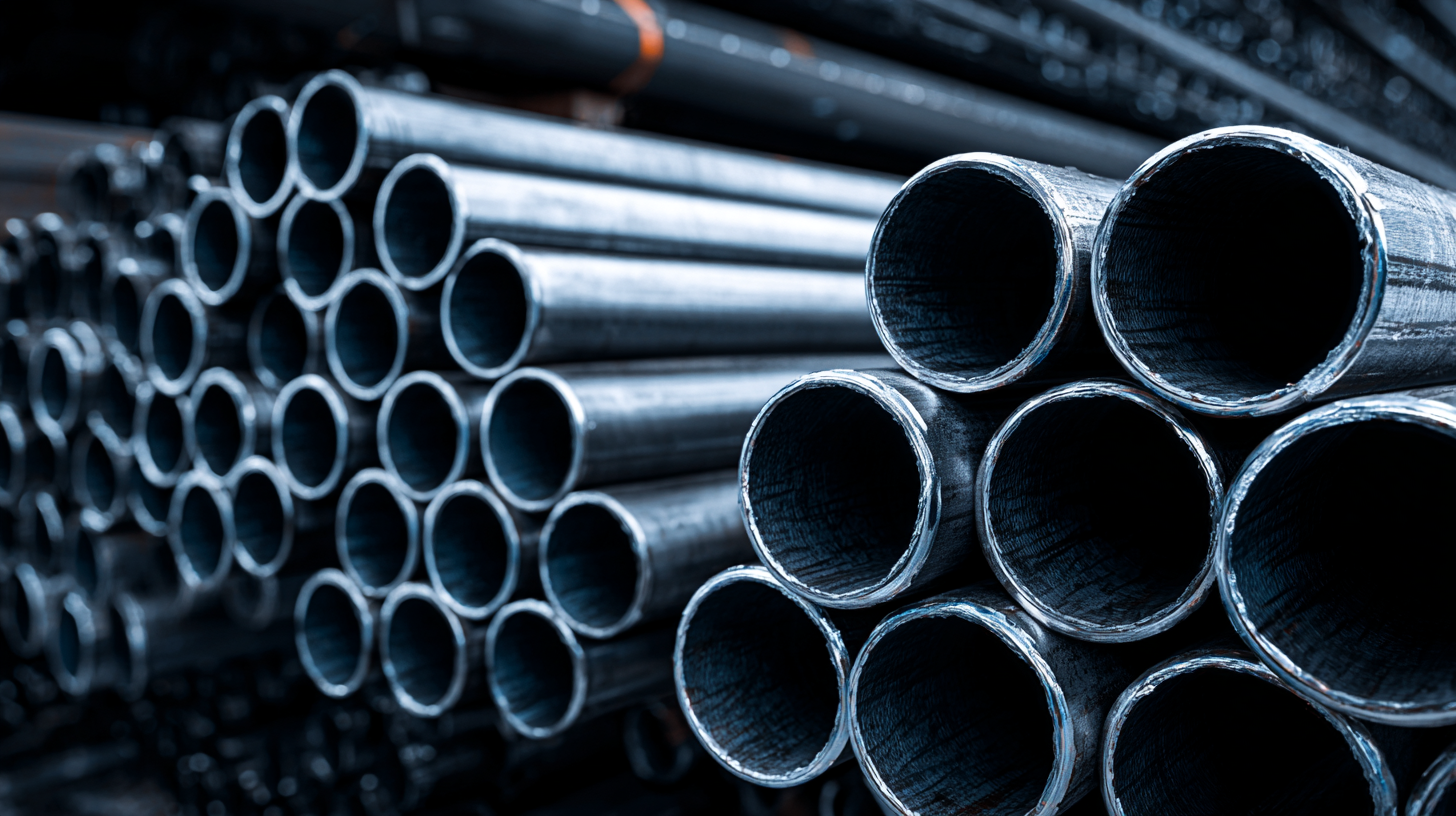
The Metal Pipe industry is really going through some exciting changes lately, with a lot of innovative stuff happening and the market growing pretty fast. Thanks to advances in technology and a bigger push from various sectors, things are definitely looking up. I came across a recent report from Research and Markets that says the global metal pipe market might hit around USD 300 billion by 2026. That's a solid jump from where it was in 2021, with an annual growth rate of about 5.2%.
What’s driving this surge? Well, there’s a big push for energy-efficient systems, more infrastructure projects popping up everywhere, and the growing use of lightweight, high-strength metal pipes in construction and manufacturing.
As one of the main suppliers of steel and non-ferrous metals worldwide, XINYONGYUAN (SHANDONG) STEEL SALES CO., LTD. is all about providing customized, reliable metal solutions to match the changing needs of our clients around the globe. With our experience and industry knowledge, we’re ready to keep up with these trends and help shape the future of metal pipe innovation.
Key Drivers of Innovation in Metal Pipe Technologies
You know, when it comes to metal pipe tech, things are really shifting fast. There’s a bunch of factors driving these cool advancements—mainly, people are increasingly after sustainable materials and manufacturing methods that are more efficient. For instance, the global market for polypropylene pipes is expected to hit around $13.75 billion by 2025 and could grow even more, reaching about $17.79 billion by 2034. That tells us pretty clearly that the push for innovative piping options is more urgent than ever. The forecasted annual growth rate of about 2.9% suggests this market is just getting bigger, with folks adopting new tech to boost performance and cut down on environmental impact.
On top of that, the overall pipe market is predicted to jump from $1.51 billion in 2024 to roughly $2.27 billion by 2032—with a CAGR of around 5.2%. A big part of that growth comes from more construction work and the rising demand for modern fixtures in kitchens and bathrooms. Plus, using advanced materials and smarter designs can give contractors and engineers better durability and more flexibility for different projects.
So, if companies want to stay ahead of the game, it’s really important to invest in research and development—especially in new materials that combine strength with sustainability. Also, tapping into smarter manufacturing techniques can help streamline production and better meet what customers are looking for these days. Honestly, putting resources into these areas isn’t just smart; it’s pretty much essential if you’re aiming to get a solid slice of this growing market.
The Future of Metal Pipe Innovations and Market Growth Trends
Emerging Materials and Their Impact on Metal Pipe Performance
The world of metal pipe innovations is really changing fast these days. Thanks to new, advanced materials popping up, we're seeing pipes that perform better and last longer. Manufacturers are crafting new alloys and composite materials that resist corrosion, are lighter, and stronger—things that not only boost the lifespan of these pipes but can also cut down on ongoing maintenance costs. For example, blending stainless steel with high-grade plastics has proven to be pretty effective against harsh chemicals, making these hybrid materials super useful across a variety of industries.
If you're thinking about upgrading or swapping out metal pipes, my advice? Chat with material scientists or engineers. They can help you figure out which of the newer materials might actually be a better fit for your specific needs compared to the old-school options.
Also, there's a big push toward sustainability nowadays, which is pushing innovations in how these pipes are made. Methods like 3D printing and recycling scrap metals are becoming more common, helping manufacturers produce pipes with less impact on the environment. Not only does this make the whole process more efficient, but it also lines up pretty well with global efforts to be more eco-friendly.
My tip? Keep an eye on suppliers who are serious about sustainable practices. Their products often offer a nice balance of performance and a smaller carbon footprint—something worth considering for your projects.
Market Demand Trends Shaping the Future of Metal Pipe Industry
So, the metal pipe industry is really going through some pretty interesting changes lately. Market trends are playing a huge role in shaping where things are headed. For instance, the global market for metal pipes is expected to grow from around $15.1 billion in 2024 to a solid $22.7 billion by 2032. That’s a pretty healthy compound annual growth rate of about 5.2%. And when you look at Steel Pipes specifically, things look even more promising—projected to jump from just over $100.8 billion in 2024 to roughly $161.7 billion by 2037. This growth is mainly driven by steady demand from sectors like oil and gas, which keeps things buzzing.
A few key factors are really fueling this growth. One major driver is the surge in investments for large-scale natural gas and oil pipelines around the world. As countries and companies develop their infrastructure, it’s changing the way supply chains operate, and they’re also pouring money into new tech to make everything more efficient and eco-friendly. Speaking of which, there's definitely a growing push towards using more sustainable and durable materials—companies are constantly innovating to keep up. Overall, the future of the metal pipe industry isn’t just about market numbers; it’s also about how well the industry adapts to environmental concerns and keeps pace with technological advances. It’s pretty exciting to see how it all unfolds, really.
Sustainability Practices in Metal Pipe Manufacturing
Lately, sustainability has really become a big deal in the metal pipe manufacturing world. It’s something everyone’s talking about, not just because of new rules but also because consumers are demanding greener, more eco-friendly options. Companies are now putting a lot more effort into using recycled materials, which means they’re pulling less raw stuff out of the ground and using less energy overall. Thanks to some pretty cool recycling tech, metal scraps are being reused more efficiently, helping reduce waste and promote a circular economy—a win-win! On top of that, many firms are investing in cleaner, more eco-conscious production methods that cut down on pollution and minimize their environmental footprint.
And it doesn’t stop there. Water and energy saving are huge parts of the sustainability puzzle. Modern gadgets like energy-efficient machinery and water-recirculation systems are not only saving costs but also making a real difference in conserving our planet’s resources. Some companies are even tapping into renewable energy like solar or wind to power their plants—it’s a big step toward slashing greenhouse gases. These efforts do more than just look good; they really boost a company's reputation and show they’re serious about fighting climate change. Honestly, these kinds of sustainable practices are shaping the future of metal pipe manufacturing and are totally necessary if we want to make a real impact.
The Role of Automation and Smart Technology in Metal Pipe Production
You know, when it comes to making metal pipes these days, things are definitely changing fast. Automation and smart tech are really reshaping the industry. Thanks to connected systems and real-time data, manufacturers can work more efficiently and smooth out their processes. Have you heard about smart factories? They're basically places packed with automated equipment and data analysis tools that help with better decision-making and smarter resource use. This isn’t just about ramping up output — it also helps cut down on waste, which is super important if we want manufacturing to be more sustainable.
As companies pour money into tech like AI and robots, they’re getting better at meeting the growing market needs. Things like automated pipe and tube bending machines are a big part of this shift. Experts expect this part of the industry to keep growing pretty significantly. These machines don't just boost speed—they also bump up accuracy and help cut costs. Moving into Industry 4.0, it’s clear that smart manufacturing will be the way forward — shaping the future of metal pipe production and setting new standards for quality and efficiency in a pretty competitive space.
The Future of Metal Pipe Innovations and Market Growth Trends
| Innovation Type | Description | Market Growth (%) | Adoption Rate (%) | Year of Emergence |
| Automated Welding | Utilizing robots for precision welding to enhance efficiency | 15% | 30% | 2021 |
| Smart Sensors | Sensors for real-time monitoring of pipe integrity | 20% | 25% | 2022 |
| 3D Printing | On-demand manufacturing of complex pipe designs | 30% | 20% | 2023 |
| Augmented Reality (AR) | Utilizing AR for training and maintenance guidance | 25% | 15% | 2024 |
| Cloud-based Software | Software for managing production and logistics remotely | 18% | 35% | 2022 |
Challenges and Opportunities in the Global Metal Pipe Market
The global metal pipe market is really gearing up for some big changes. On one hand, it’s facing plenty of challenges, but on the other, there are also lots of exciting opportunities ahead. The steel industry is about to go through a major transformation, especially with the upcoming debut of truly zero-carbon emission steel coming in 2025 — that’s a huge milestone. As countries push hard on their sustainability goals, manufacturers of metal pipes are feeling the pressure to get creative. They're now focusing on greener production methods and materials that fit nicely with this revolutionary shift. It’s not just about helping the environment; it’s also about meeting the rising demand for eco-friendly infrastructure across different sectors.
That said, the path to a greener future isn’t exactly smooth sailing. Companies are dealing with strict regulations, the need for big investments, and the challenge of keeping up with fast-changing technology. To really make progress, industry players will need to team up, sharing ideas and forming strategic partnerships. Embracing new tech, like advanced manufacturing processes and smart factory practices, will be key for boosting efficiency and staying sustainable. All in all, those who can successfully harness these innovations will have the upper hand in a market that's increasingly obsessed with carbon neutrality and caring for the planet.
FAQS
: The global market for metal pipes is anticipated to expand from $15.1 billion in 2024 to $22.7 billion by 2032.
The steel pipe segment is particularly promising, with projections suggesting an increase in market size from over $100.8 billion in 2024 to approximately $161.7 billion by 2037.
Key factors include rising investments in multinational natural gas and petroleum pipelines, infrastructural development, and increasing demand for eco-friendly and durable materials.
Manufacturers are prioritizing the use of recycled materials, adopting advanced recycling technologies, and implementing cleaner production processes to reduce emissions and environmental impact.
Energy efficiency is crucial as it lowers operational costs and conserves resources, with companies investing in energy-efficient machinery and water-recirculation systems.
Automation and smart technology enhance efficiency and streamline production processes, leading to optimized operations and minimized waste.
Technologies such as artificial intelligence, robotics, and automated pipe bending machines are key innovations contributing to this transformation.
The adoption of smart manufacturing processes will define the future of metal pipe production, setting new standards for quality and efficiency in a competitive market.
Implementing sustainability practices enhances a company's reputation and aligns with global efforts to combat climate change.
Industry 4.0, characterized by interconnected systems and real-time data, is driving the shift towards smart factories and modernizing metal pipe production to meet rising market demands.
Conclusion
Looking ahead, it’s clear that the future of metal pipe innovations is really being shaped by a mix of cutting-edge tech and the growing demands of the market. Things like new materials are opening up exciting possibilities — making pipes stronger, longer-lasting, and more adaptable across different industries. Plus, sustainability is no longer just a buzzword; it’s becoming a core part of how these pipes are made, matching global efforts to cut down on environmental impact.
If you keep an eye on current trends, you'll notice that automation and smart tech are really changing the game—bringing higher efficiency and precision to manufacturing. But yeah, there are challenges too, and overcoming them will need some smart and strategic innovation. At XINYONGYUAN (SHANDONG) STEEL SALES CO., LTD., we’re all about offering customized solutions to meet our customers' changing needs. We’re also committed to helping push the industry towards a greener, more sustainable future.

 Angle Steel
 Channel Steel
 Universal Beam (l-Beam)
 H-Beam Steel
 Galvalume Steel Coil
 Galvalume Steel Sheet
 Galvanized Steel Sheet
 Color Coated Plate
 Stainless Steel Bar
 Stainless Steel Pipe
 Steel Bar
 Wire Rope
 Carbon Steel Pipe
 Carbon Steel Plate
 Aluminum Plate
 Aluminum Coil
 Aluminum Pipe
 Aluminum Bar
 Magnesium Ingot
 Fasteners